
If you're considering braces or clear aligners, you probably want to know one thing: how long will this actually take? The honest answer, and one Dr. Steve Huntsman shares with families in West Valley City every day, is that most orthodontic treatment lasts between 12 and 24 months. But your timeline depends on several factors that are unique to you.
What Determines How Long Orthodontic Treatment Takes?
At Ortho:Dana, smile plans are built around your specific case, giving you a realistic picture of what to expect. Minor alignment cases might wrap up in as few as 6 months. More complex bite corrections or skeletal concerns can extend treatment to 30 months or longer. The good news? A free consult includes a thorough exam so you'll know your estimated timeline before you commit to anything.
Treatment complexity matters most. Simple crowding responds quickly to orthodontic pressure. But if you're dealing with a significant overbite, crossbite, or jaw alignment issue, your teeth and bone need more time to shift safely into their new positions.
Your age, the smile plan you choose, and how closely you follow your orthodontist's instructions all play a role too. We'll break down each of these factors so you can walk into your first appointment with realistic expectations.
Phases and Timeline Breakdown
Orthodontic treatment works in four phases: evaluation and planning (1-2 weeks), active treatment (6-24 months), refinement (1-3 months), and retention (ongoing). During active treatment, gentle pressure triggers bone remodeling that gradually shifts teeth into alignment. Here's what each phase looks like in practice.
Your Free Consult and Planning Phase
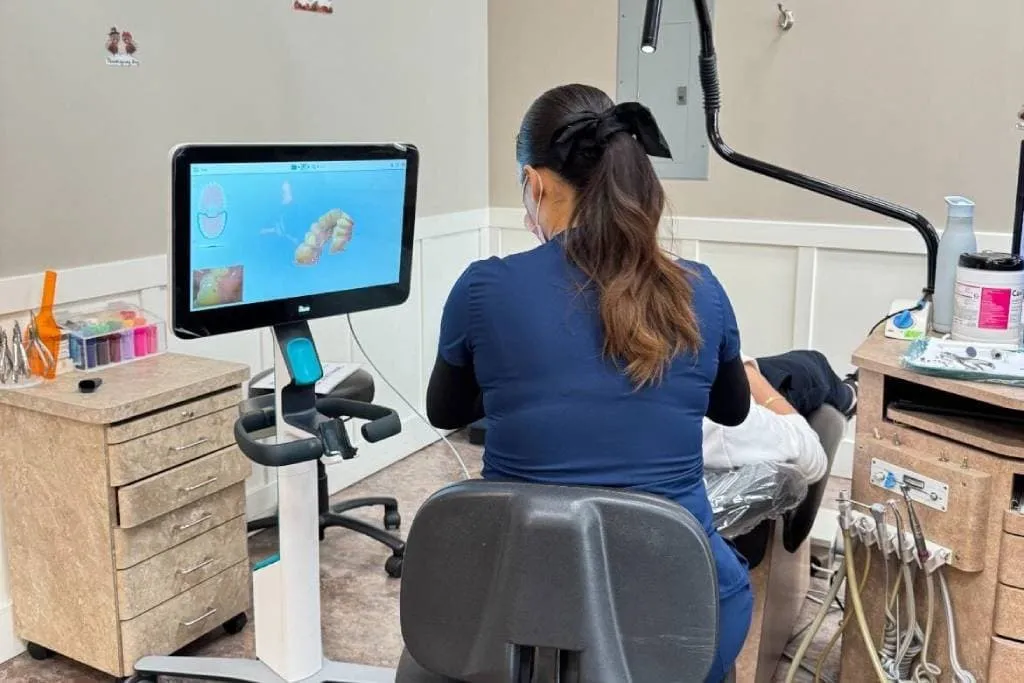
This first step takes about 1-2 weeks. Your orthodontist examines your teeth, takes digital X-rays, and creates 3D images of your smile. All of that information feeds into a custom treatment plan that addresses your specific concerns. At Ortho:Dana in West Valley City, you'll discuss your smile goals, the smile plans that fit your lifestyle, estimated timeline, and what to expect during active treatment.
Active Treatment: Where the Real Change Happens
Active treatment runs anywhere from 6 to 24 months. Whether you choose braces or Invisalign, your teeth gradually shift into alignment through gentle, consistent pressure.
Here's the biology behind it: as pressure is applied to one side of a tooth, the bone on that side slowly breaks down. New bone forms on the opposite side. This process, called bone remodeling, can't be rushed without risking damage to your teeth and roots. The American Association of Orthodontists notes that teeth move at a rate requiring regular monitoring and adjustment throughout treatment.
Refinement and Retention
Refinement comes near the end, lasting roughly 1-3 months. Your orthodontist fine-tunes your results during this phase, making minor adjustments to perfect your bite or close small gaps. With Invisalign or Angel Aligners, you might receive additional trays to address areas that didn't respond exactly as predicted.
Then comes retention, and this one is ongoing. Your teeth have a natural tendency to drift back toward their original positions. Retainers prevent this relapse and protect your investment. Most people wear retainers full-time for the first few months after treatment, then transition to nighttime-only wear.
Appointment Frequency During Treatment
Plan for orthodontic visits every 4 to 8 weeks during active treatment. These appointments run about 15 to 30 minutes. Your orthodontist checks your progress, makes adjustments, and addresses any concerns you bring up.
Benefits of Understanding Your Orthodontic Timeline
Knowing what to expect from your treatment, whether you're still exploring smile plans or already wearing braces, makes the whole process smoother. Here's why timeline awareness matters:
Staying on Track Gets Easier
When you understand that teeth move gradually through bone remodeling, you won't feel discouraged if dramatic changes don't show up in the first few weeks. Patience comes easier when you know you're right on schedule. People who understand each phase of treatment also tend to follow care instructions more consistently. When you know why wearing your aligners 20-22 hours daily matters, you're more likely to actually do it.
Planning Around Life Events
Getting married next year? Starting a new job? Understanding your timeline helps you coordinate treatment with important dates. Some people time things so braces come off before a wedding or graduation, and that kind of planning only works when you have a clear picture of your schedule from the start.
- Many people don't realize that retention is a lifelong commitment. Understanding this early helps you maintain your results long after active treatment ends.
- For parents, knowing that early orthodontic evaluation (around age 7) can identify concerns before they become complex means potentially shorter treatment for your child down the road. Two-Phase Treatment addresses developing problems early, which can reduce the scope of treatment needed later.
Braces vs. Invisalign vs. Aligners: Duration Compared
Treatment duration varies by method. Traditional braces average 18-24 months, while Invisalign and Angel Aligners tend to take 12-18 months. Here's a full comparison:
| Treatment Type | Estimated Duration | Best For | Key Consideration |
|---|---|---|---|
| Traditional Metal Braces | 18-24 months | Complex cases, significant bite correction | Works 24/7, no removal needed |
| Invisalign Clear Aligners | 12-18 months | Mild to moderate alignment concerns | Requires 20-22 hrs/day compliance |
| Angel Aligners | 12-18 months | Comparable to Invisalign | Requires 20-22 hrs/day compliance |
| Two-Phase Treatment (Children) | Phase 1: 6-12 months + Phase 2: 12-18 months | Early intervention for developing concerns | Resting period between phases |
| Self-Ligating Braces | 18-24 months | Similar to traditional braces | May require fewer adjustments |
Keep in mind, these ranges overlap quite a bit. Your orthodontist picks the method that fits your mouth, not just a chart. These are general estimates based on typical cases, and your actual timeline may differ based on case complexity and compliance.
Traditional Metal Braces
Metal braces remain the most versatile option for complex cases, offering precise control over tooth movement in all three dimensions. While they require 18 to 24 months on average, simpler cases finish sooner and severe malocclusion takes longer. One clear advantage: they work around the clock. You can't take them out, which means treatment progresses consistently regardless of your daily habits.
Invisalign and Aligner Treatment
For mild to moderate cases, Invisalign and Angel Aligners often complete treatment in 12 to 18 months. The catch? Aligners only work when you wear them. People who consistently keep their aligners in 20-22 hours daily see the best results. Remove them too often, and your treatment timeline stretches.
Two-Phase Treatment Timeline
Some children benefit from early orthodontic intervention between ages 7 and 10. Phase 1 addresses developing problems like narrow palates, severe crowding, or harmful habits, lasting 6 to 12 months. After a resting period, Phase 2 begins once permanent teeth have erupted, taking 12 to 18 months with braces or aligners. While Two-Phase Treatment involves more total time in orthodontic care, it often prevents the need for extractions or jaw correction later.
Five Factors That Affect Your Treatment Timeline
Five main factors determine how long orthodontic treatment takes: (1) the severity of your misalignment, (2) your age, (3) how closely you follow instructions, (4) your oral health, and (5) the complexity of your bite. Dr. Huntsman, a Diplomate of the American Sleep and Breathing Academy, evaluates each of these during your no-cost visit to build an accurate estimate.
Severity of Misalignment
Severity is the single biggest factor. Mild crowding or spacing resolves much faster than severe malocclusion. A few slightly crooked teeth might straighten in 6 to 9 months, while significant bite problems requiring substantial tooth movement need 18 months or more.
Age and Bone Density
Teenagers often respond to orthodontic treatment faster than adults. Their jaws are still growing, and their bone tissue remodels more readily. Adult bone is denser and more established, so teeth move at a slightly slower pace. That said, adults absolutely achieve excellent results. The difference in timeline is a matter of months, not years.
Compliance: The Factor You Control
For aligner wearers, keeping your trays in 20-22 hours daily is non-negotiable for staying on schedule. For braces, compliance means avoiding foods that damage brackets, wearing rubber bands as prescribed, and maintaining excellent oral hygiene. Keeping all scheduled appointments at Ortho:Dana in West Valley City also keeps things moving on time.
Oral Health and Bite Complexity
Cavities, gum disease, or other concerns can pause your orthodontic treatment. Your mouth needs to be healthy before teeth can move safely. Crossbites, open bites, underbites, and overbites add complexity too, because these involve not just tooth position but how your upper and lower jaws relate to each other. Correcting the bite takes longer than straightening teeth alone, sometimes adding several months to the overall timeline.
Who Falls Where on the Treatment Timeline?
Not everyone's treatment takes the same amount of time. Here's a general guide to help you estimate where you might land.
What Does a Shorter Treatment Look Like?
If you have mild spacing, minor rotations of a few teeth, or cosmetic concerns without bite problems, you're looking at roughly 6 to 12 months. These cases respond well to Invisalign or Angel Aligners, and people who are highly compliant tend to finish right on schedule or even ahead of it.
What About Moderate or Longer Timelines?
Moderate cases, think moderate crowding, minor overbite correction, or a combination of alignment and bite concerns, typically fall in the 12 to 18 month range. Most teens with typical orthodontic needs land here too.
Longer treatment (18-30+ months) applies when there's severe crowding requiring extractions, significant bite problems, skeletal discrepancies between upper and lower jaws, or cases requiring surgical orthodontics. Situations where oral health issues cause treatment pauses also extend the timeline.
What About Children and Adults?
Dr. Huntsman and the American Association of Orthodontists recommend all children have an orthodontic screening by age 7. Early evaluation can identify concerns while your child's jaw is still developing. Early intervention doesn't always mean early treatment, but when it's needed, it can simplify future care significantly.
For adults, it's never too late to upgrade your smile. Adults make up a growing percentage of the people who we help, and treatment works beautifully at any age. Expect your timeline to be on the slightly longer end of the range, but the results are absolutely worth the wait.
Ready to Find Out Your Timeline?
Understanding how long orthodontic treatment takes helps you plan ahead and stay motivated throughout the process. We get it, waiting isn't fun. But knowing what's ahead makes it easier, and the right smile plan keeps everything moving in the right direction.
The best way to get an accurate estimate? A thorough evaluation with an experienced orthodontist who can assess your specific needs and map out a realistic timeline. At Ortho:Dana in West Valley City, that first conversation is always a free consult, and there's no pressure to commit. If you've been wondering how long does orthodontic treatment take for your specific smile, that's exactly what we'll answer.
Ready to get started? Request your free consult at Ortho:Dana and sit back, relax & get started.
Frequently Asked Questions About Orthodontic Treatment Duration
Can I Speed Up My Orthodontic Treatment?
The best way to keep treatment on schedule is excellent compliance: wear your aligners as prescribed, keep all your appointments, and follow your orthodontist's instructions carefully. Some people ask about accelerated devices like AcceleDent. Talk to your orthodontist during your free consult about whether that's an option for your case.
How Long Does Invisalign Take Compared to Braces?
For similar cases, Invisalign often finishes slightly faster, around 12 to 18 months versus 18 to 24 months for traditional braces. Braces handle complex cases that aligners can't address as effectively. The right choice depends on your specific needs, not just speed.
What Happens If I Don't Wear My Retainer?
Your teeth shift back. It happens surprisingly fast, especially in the first year after treatment. Some people end up needing retreatment to correct the relapse. Most orthodontists recommend wearing your retainer every night indefinitely to protect your results. Wear your retainer as directed.
Is Orthodontic Treatment Faster for Kids or Adults?
Children and teenagers typically finish treatment slightly faster due to ongoing jaw growth and more responsive bone tissue. The difference is a matter of months, though. Adults achieve equally beautiful results, and your specific case complexity matters more than your age.
How Often Do I Need Orthodontic Appointments?
Every 4 to 8 weeks during active treatment. Braces wearers come in every 4 to 6 weeks for adjustments, while aligner wearers may have slightly longer intervals between visits. Each appointment takes about 15 to 30 minutes.